Germany Study Guide For Indian Students

Why Germany?

Germany stands out as a world-class study destination, hosting over 400,000 international students—with India now being the largest source country. Its primary appeal lies in its “Public Good” model, where public universities offer high-quality, research-driven education with zero tuition fees for both domestic and international students, requiring only a small semester contribution. Boasting elite institutions like the Technical University of Munich (TUM) and Heidelberg University, the German system is renowned for its academic rigor and deep industry integration, particularly in STEM and Business. Beyond the classroom, Germany provides a stable, safe, and multicultural environment with manageable living costs and a generous post-study work visa of 18 months. By combining prestigious, globally recognized degrees with innovative teaching and strong employment outcomes, Germany offers a strategic, high-value pathway for students looking to build a sustainable global career.

Education System in Germany

Germany’s higher education system is uniquely categorized into three distinct types: Universitäten (research universities) for theoretical and academic depth, Fachhochschulen (universities of applied sciences) for industry-aligned practical training, and specialized Colleges of Art, Music, or Film. A major draw for international students is that public universities—which make up the vast majority—do not charge tuition fees for both EU and non-EU students, requiring only a modest semester contribution of €150 to €350 that often includes a public transport pass. While the curriculum is traditionally theory-heavy and lecture-based, Germany is increasingly prioritizing MINT (STEM) and AI fields to address local skill shortages. Students can legally work up to 140 full days per year to support themselves, with a minimum wage of €13.90 per hour as of 2026. Furthermore, graduates benefit from an 18-month post-study work visa to secure a career. While English-taught programs are expanding, a basic command of the German language (A2/B1) remains essential for successful integration and maximizing local job opportunities.

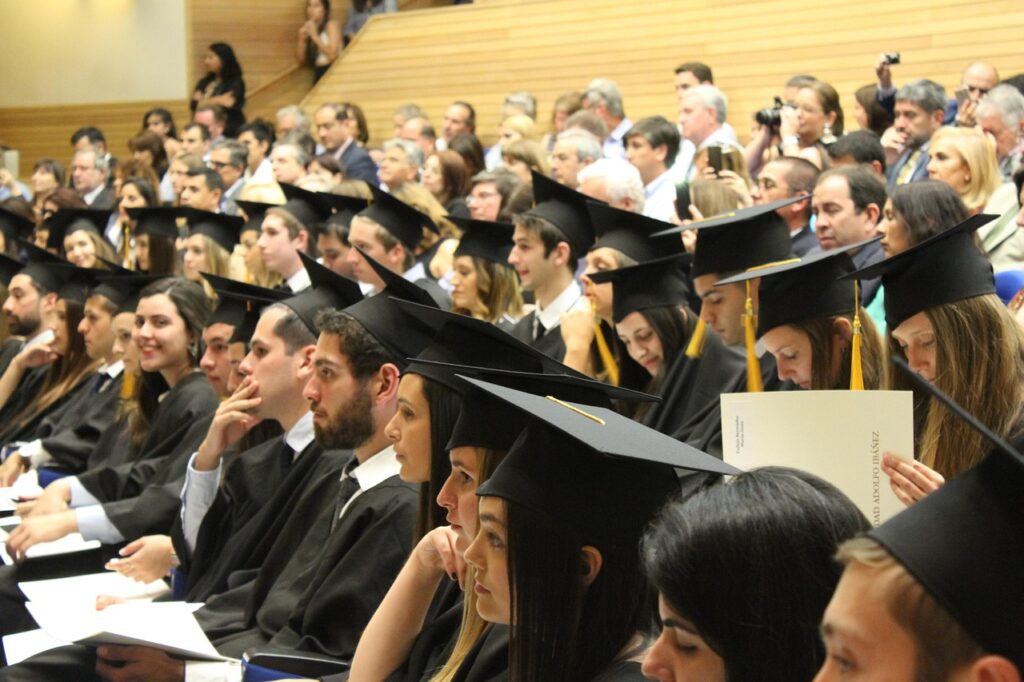
college students, diploma, graduate, tassel, hat, university, college students, diploma, graduate, graduate, graduate, graduate, university, university, university, university, university

Top Universities in Germany

Here we have provided the List of Top Ranked Universities in Germany based on world university rankings. These University rankings help students to compare quality higher education institutions and to identify the best universities worldwide.


Required Standardized Tests for Germany Admissions

To get Admission in any German University and to study in English you must prove your English Language Skills. So to Study in any German University one should take English Language Tests like IELTS, TOEFL and should get an IELTS Score of 6.0 or TOEFL 550 (Paper Based), 213 (Computer Based). While some other language tests also accepted by German Universities. To know the information on Entrance Tests, it is better to check your chosen institution beforehand. Along with these English Language Tests Student must possess A1 Level of German Language and should have 60% above Percentage in Academics to get Admission in any Universities in Germany.

Cost of Studies in Germany

While the currency of Germany is the Euro (€), it remains a highly affordable study destination due to the absence of tuition fees at most public universities. For the 2026 intake, international students must primarily budget for the semester contribution (typically €150–€450), which often includes a local transport pass, and monthly living expenses ranging from €950 to €1,400. To secure a student visa, the German government requires a blocked account (Sperrkonto) containing at least €11,904, allowing for a monthly withdrawal of €992 to cover essentials like rent, food, and mandatory health insurance. To offset these costs, students can work up to 140 full days (or 280 half days) per year at a minimum wage of €13.90 per hour, or apply for prestigious scholarships from organizations like the DAAD or the merit-based Deutschlandstipendium. By leveraging these work rights and financial aid opportunities, students can obtain a world-class degree while maintaining a manageable budget in one of Europe’s most stable economies.

Application Process to Study in Germany

  • First Choose your Masters Program and University that you are interested in.
  • Check the Language Requirements & Take the appropriate Test.
  • Now apply for your preferred course with a higher education entrance qualification (HZB).
  • An Undergraduate Degree Completed in your Country is accepted as a suitable HZB for admission to a master’s in Germany.
  • But some specific requirements will vary depending on the institution, course, and where you’ve previously studied.
  • You can submit the Application for Master’s Programs either directly to the University or via the online portal Uni Assist.
  • While applying you need to submit the below Documents both in Online & Offline Modes.
    • An official copy of your academic qualifications.
    • A passport size photo.
    • A copy of your passport (personal information and photo ID page).
    • A Proof of language proficiency (a test certificate or online equivalent).
  • After receiving your documents University will analyze your Profile, Documents and send the Acceptance letter to your Mail or to your home if you are selected.
Scroll to Top